Enterprise Labor Management System
Enterprise Labor Management System helps multi-site enterprise operations replace spreadsheets, disconnected tools, and slow approval loops with one system for planning, tracking, compliance, and reporting.
Timeline Digital builds enterprise labor management system solutions for multi-site enterprise operations. We focus on enterprise labor governance and multi-site visibility, custom integrations, mobile-friendly workflows, and dashboards leaders can trust. Try our free labor management system. It works offline, no subscription needed.
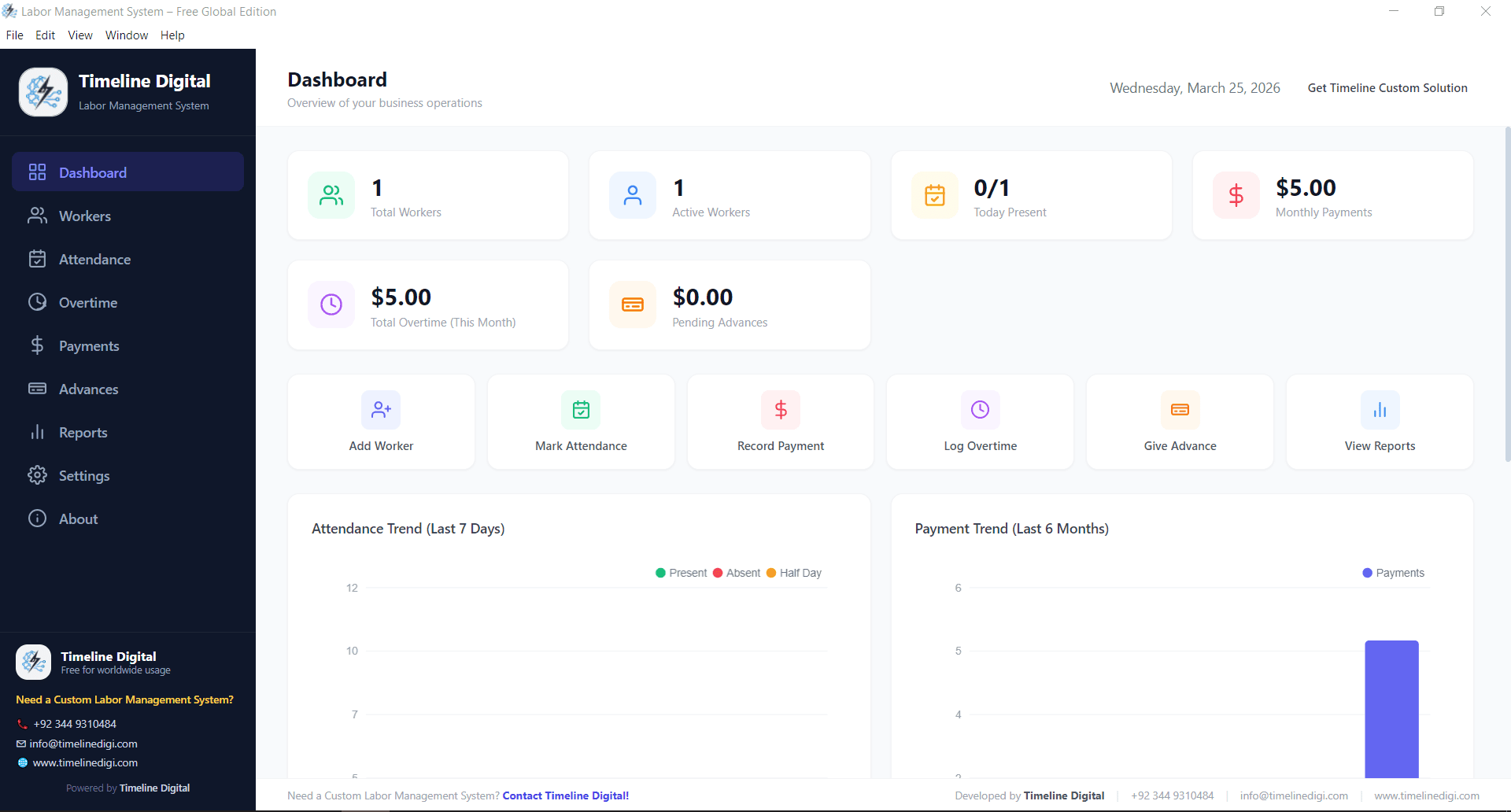
What is enterprise labor management system?
Enterprise Labor Management System is software used to plan labor demand, schedule people, track attendance, control labor cost, and improve operational reporting. The best implementations connect workforce data with approvals, compliance rules, payroll readiness, and manager decision-making so teams can move faster with fewer manual steps.
Teams investing in enterprise labor management system usually need more than isolated timekeeping. They need a custom platform that turns labor data into clearer staffing decisions, tighter compliance, and more predictable operating margins.
The strongest labor systems are not isolated time clocks. They connect staffing plans, operational priorities, approvals, labor policy rules, and executive reporting so the business can balance cost control with service levels. That is why Timeline Digital approaches each enterprise labor management system project as a full business system, not a disconnected feature list.
Why businesses invest in enterprise labor management system
Most teams adopt enterprise labor management system after labor planning, approvals, and reporting become too complex for spreadsheets or rigid off-the-shelf tools.
Large organizations need consistent labor policy enforcement across sites, countries, and business units.
Enterprise teams require role-based governance, auditability, and integration with ERP, HRIS, and BI layers.
Reporting must roll up global labor performance without losing local operational detail.
Legacy workforce platforms become hard to adapt when organizational complexity grows faster than vendor roadmaps.
What a custom enterprise labor management system platform should include
Every enterprise labor management system implementation should align system modules with your real approval paths, policy rules, analytics needs, and integration dependencies.
Multi-site org hierarchy and delegated access controls
Shared policy engine with local rule exceptions
SSO, ERP, HRIS, and BI integrations
Approval workflows across departments, regions, and business units
Audit logs, governance controls, and data retention rules
Executive dashboards with roll-up and drill-down reporting
Workflow automation for exceptions, escalations, and approvals
Localization-ready architecture for global labor operations
Unified labor data
One data model for schedules, attendance, exceptions, and outcomes gives leaders a clearer operational picture.
Workflow automation
Approvals, alerts, escalations, and exports should move automatically instead of depending on manual follow-up.
Manager and employee adoption
The interface must be easy enough for frontline teams while still giving operations and finance the controls they need.
Business benefits of enterprise labor management system
A well-built enterprise labor management system platform improves speed, labor visibility, compliance readiness, and long-term operational control.
- Governed labor operations at scale
- Better integration across ERP, HRIS, payroll, and analytics
- Roll-up reporting with local operational detail
- A labor platform that can evolve with enterprise complexity
Who we build for
Timeline Digital designs enterprise labor management system for organizations that need cleaner data, faster decisions, and better ownership over labor operations. Typical buyers include multi-site enterprise operations that have outgrown fragmented processes or need deeper integration across operations and finance.
How Timeline Digital delivers enterprise labor management system
We use a phased build process so your enterprise labor management system project stays aligned with real labor rules, real data, and real adoption constraints.
Step 1
Map current labor workflow
We document how demand planning, scheduling, time capture, approvals, reporting, and payroll handoff currently work across your operation.
Step 2
Design the target labor model
We define the future-state enterprise labor management system workflow, covering roles, policy rules, exception handling, dashboards, and integrations.
Step 3
Build core modules in phases
Timeline Digital delivers the highest-impact modules first so your team sees working software early and risk stays visible.
Step 4
Integrate, test, and launch
We validate labor rules, data quality, mobile usability, and system integrations before rollout, then support adoption after launch.
Explore related enterprise labor management system pages
These links connect enterprise labor management system with adjacent service and topic pages so visitors and search engines can follow the full solution cluster.
Labor Management System
Labor Management System helps operations, workforce, and HR leaders replace spreadsheets, disconnected tools, and slow approval loops with one system for planning, tracking, compliance, and reporting.
View pageLabor Scheduling Software
Labor Scheduling Software helps multi-shift teams and frontline managers replace spreadsheets, disconnected tools, and slow approval loops with one system for planning, tracking, compliance, and reporting.
View pageLabor Management System Software
Labor Management System Software helps businesses replacing manual workforce processes replace spreadsheets, disconnected tools, and slow approval loops with one system for planning, tracking, compliance, and reporting.
View pageLabor Management Software
Labor Management Software helps companies centralizing labor planning and reporting replace spreadsheets, disconnected tools, and slow approval loops with one system for planning, tracking, compliance, and reporting.
View pageLabor Management System Warehouse
Labor Management System Warehouse helps warehouse operators and 3PL teams replace spreadsheets, disconnected tools, and slow approval loops with one system for planning, tracking, compliance, and reporting.
View pageTime And Labor Management Software
Time And Labor Management Software helps operations, payroll, and HR teams replace spreadsheets, disconnected tools, and slow approval loops with one system for planning, tracking, compliance, and reporting.
View pageEnterprise Labor Management System | See the Software in Action
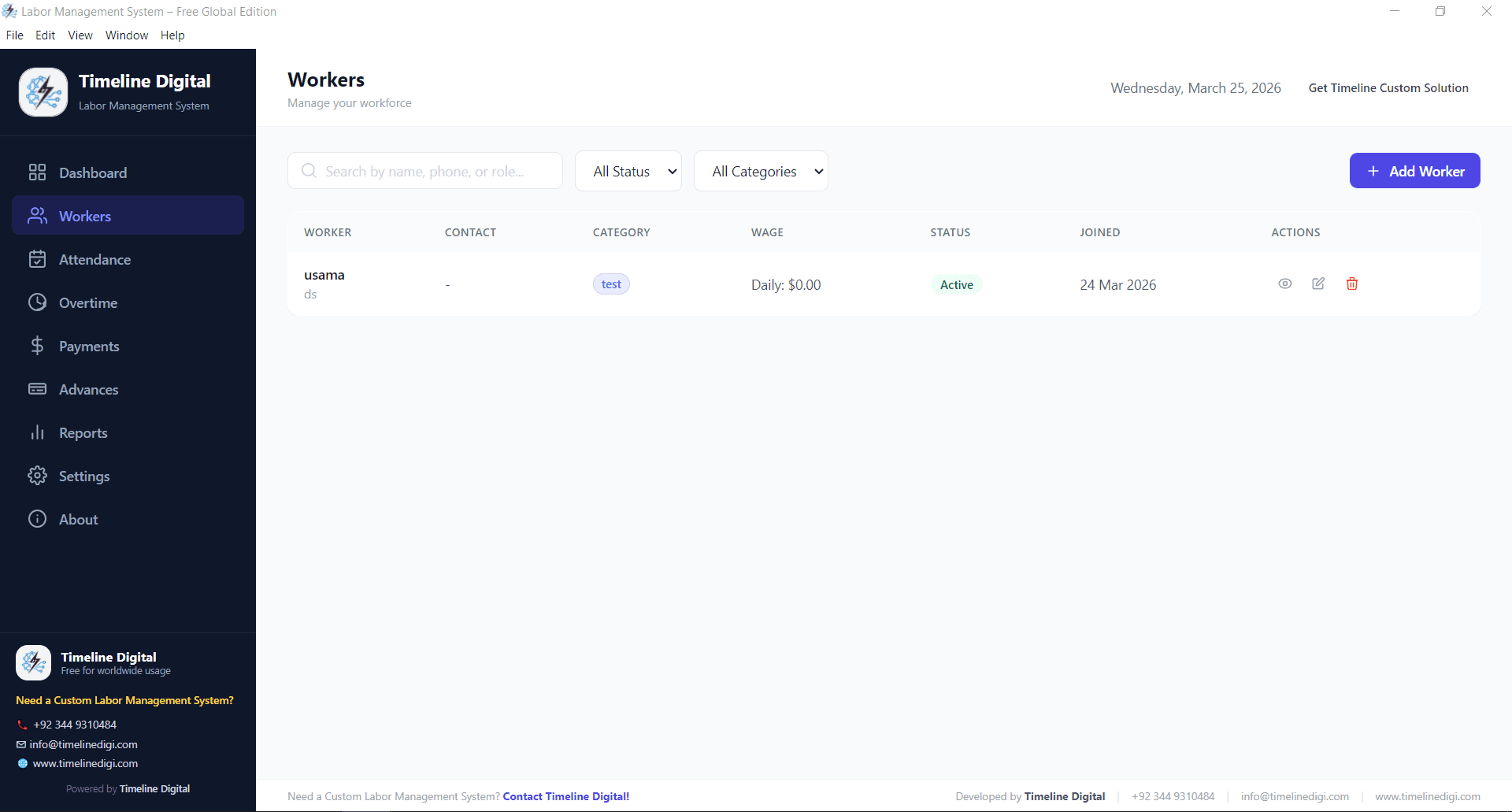
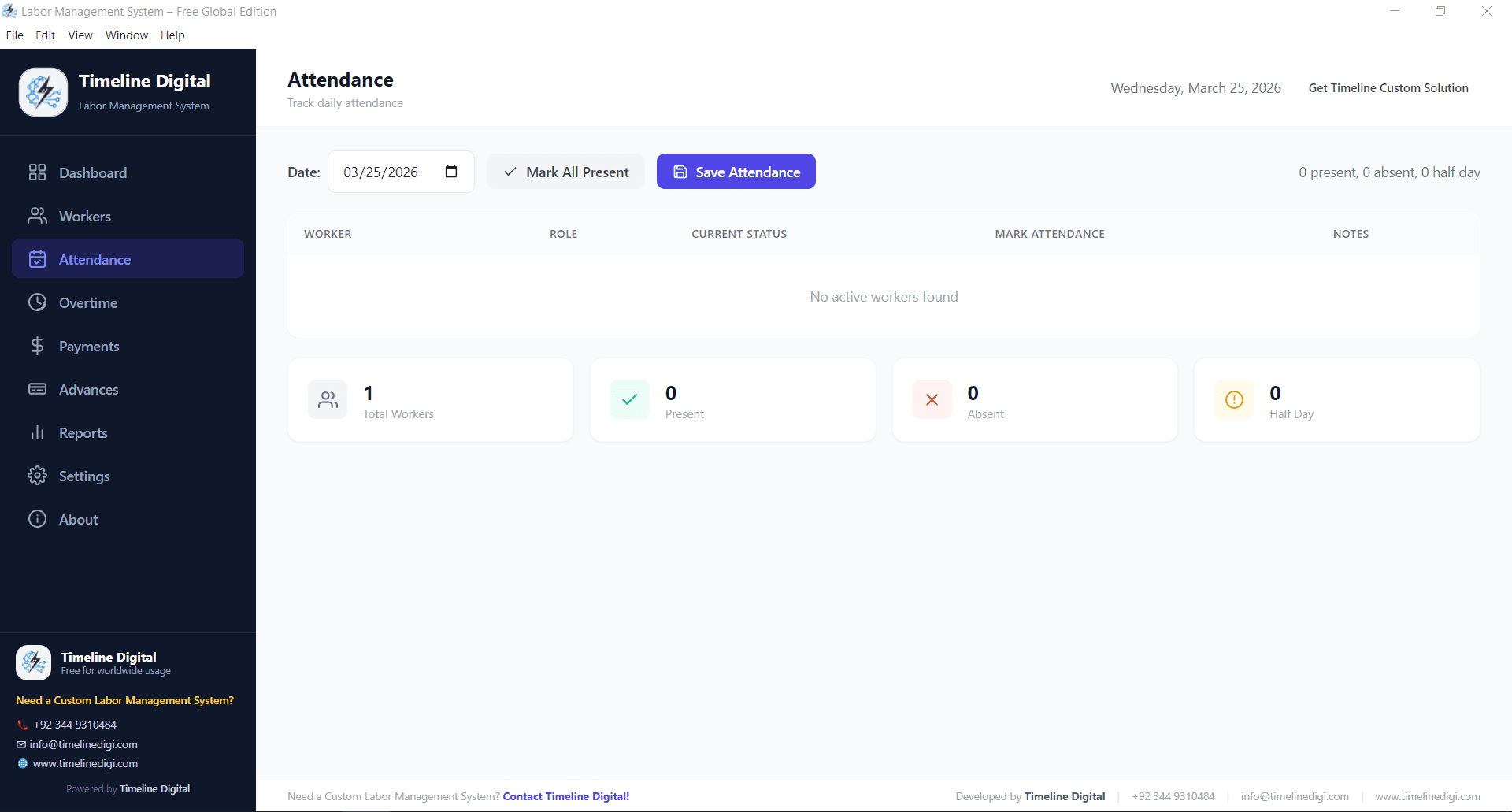
Real screenshots from the free labor management system. Every module shown here is available at no cost. Download and start using immediately.
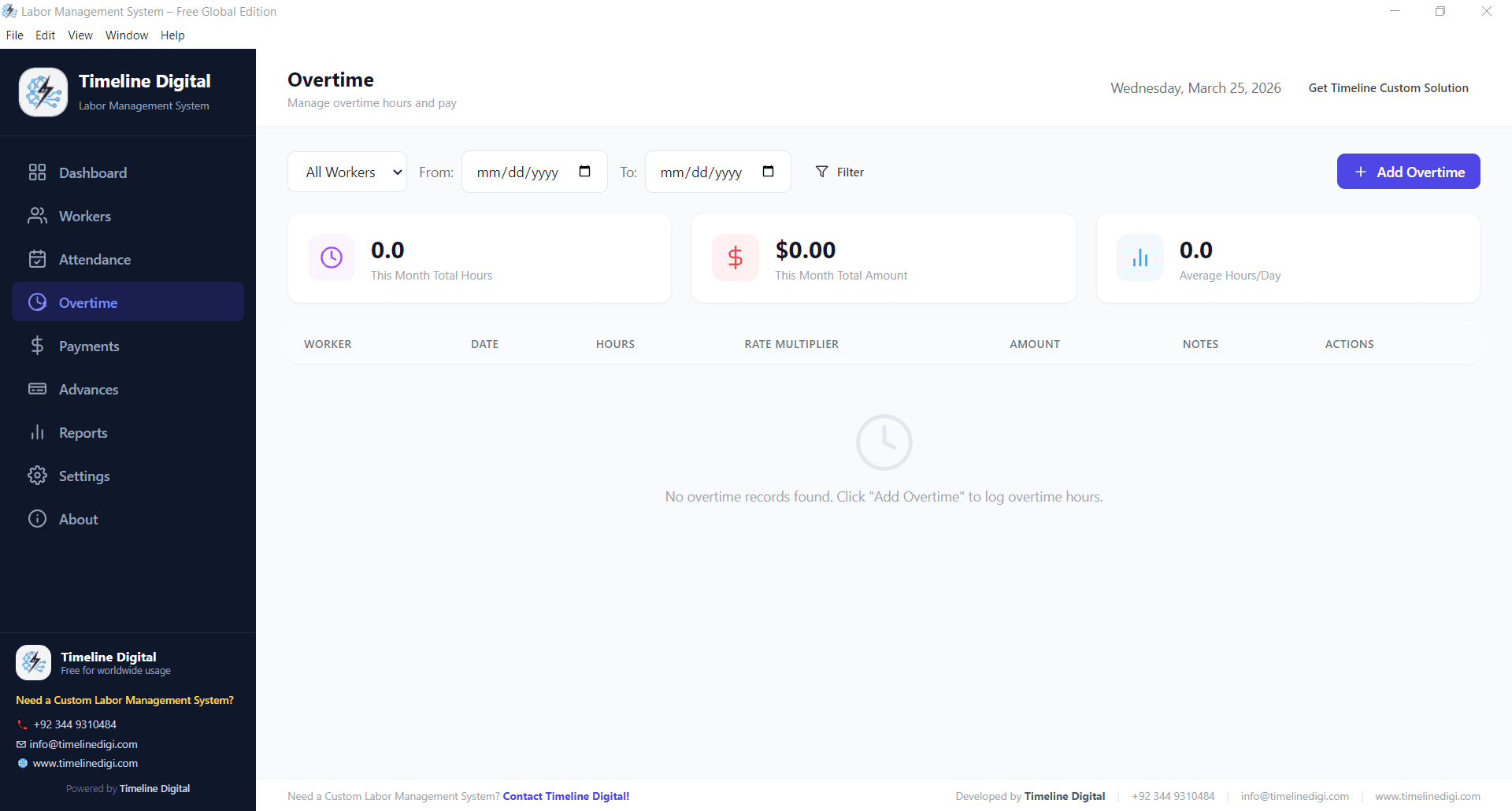
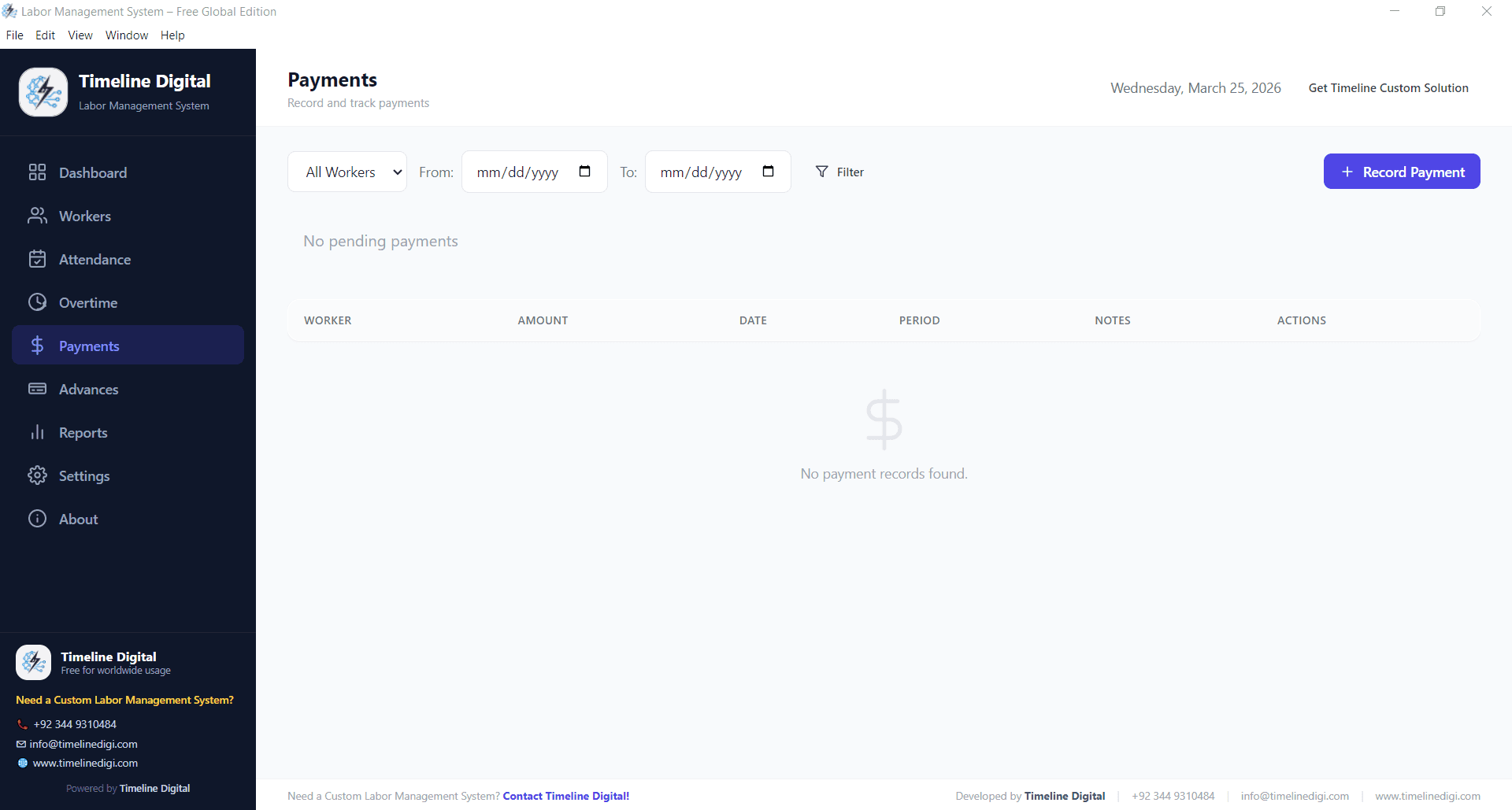
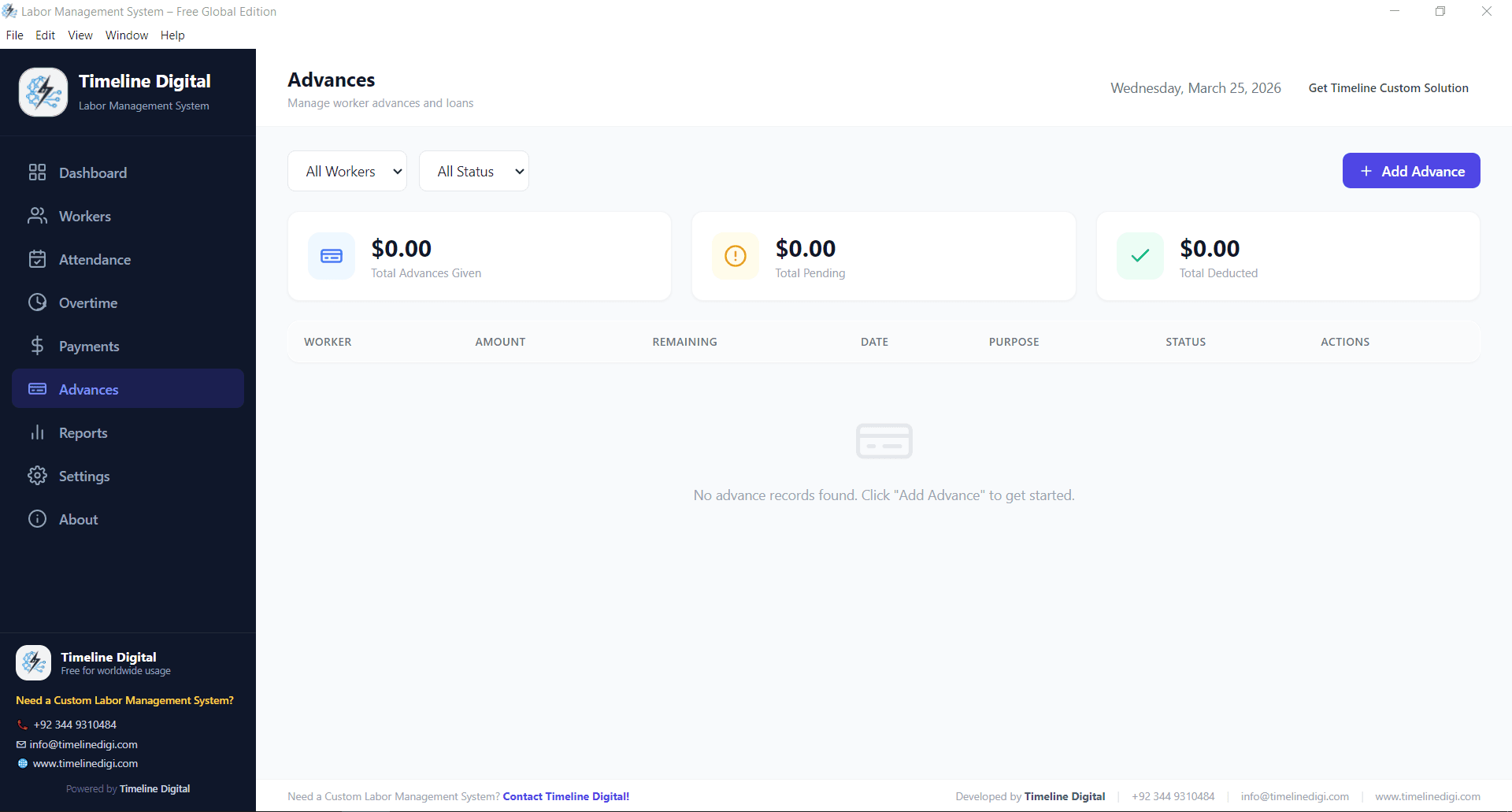
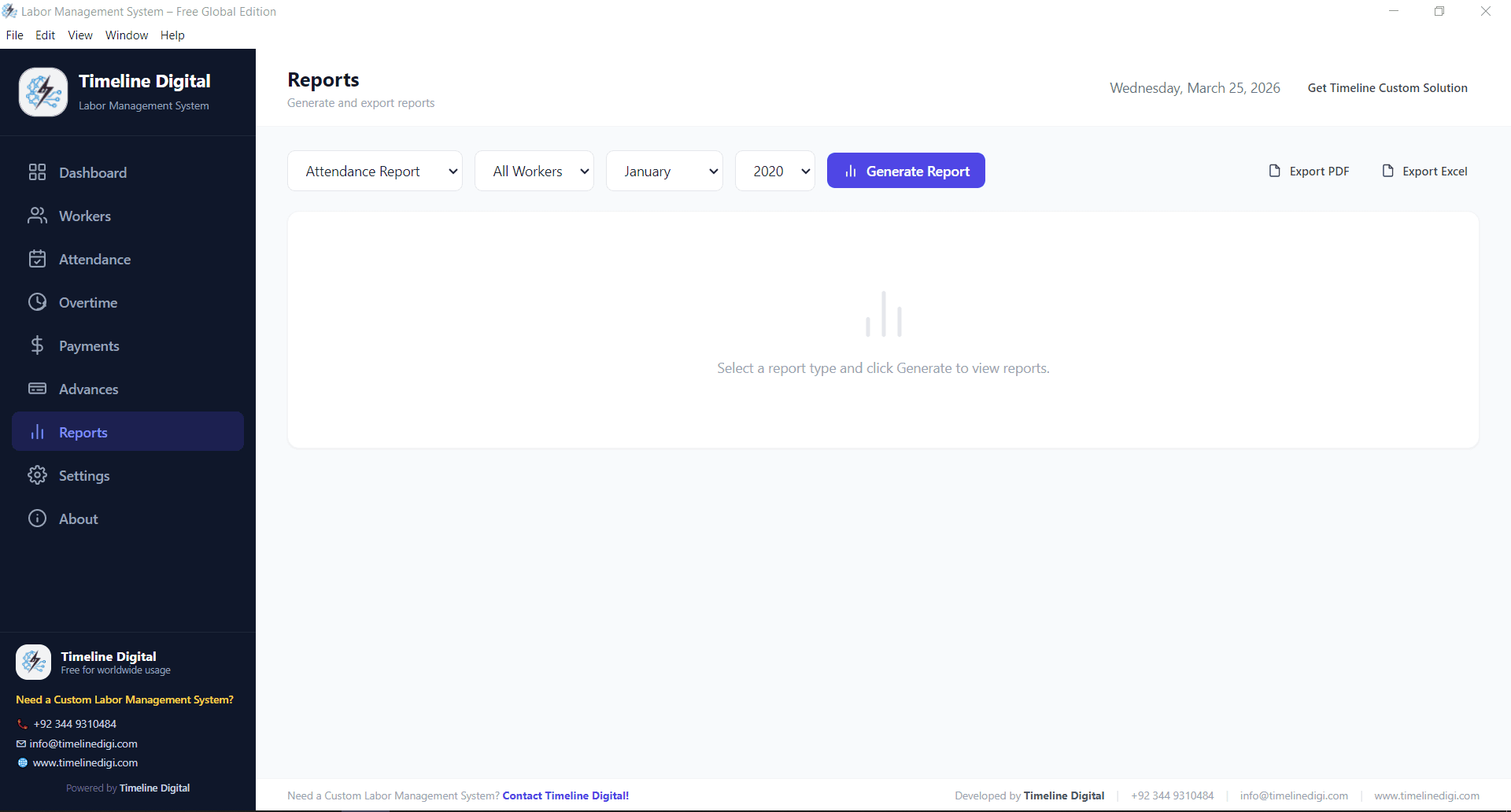
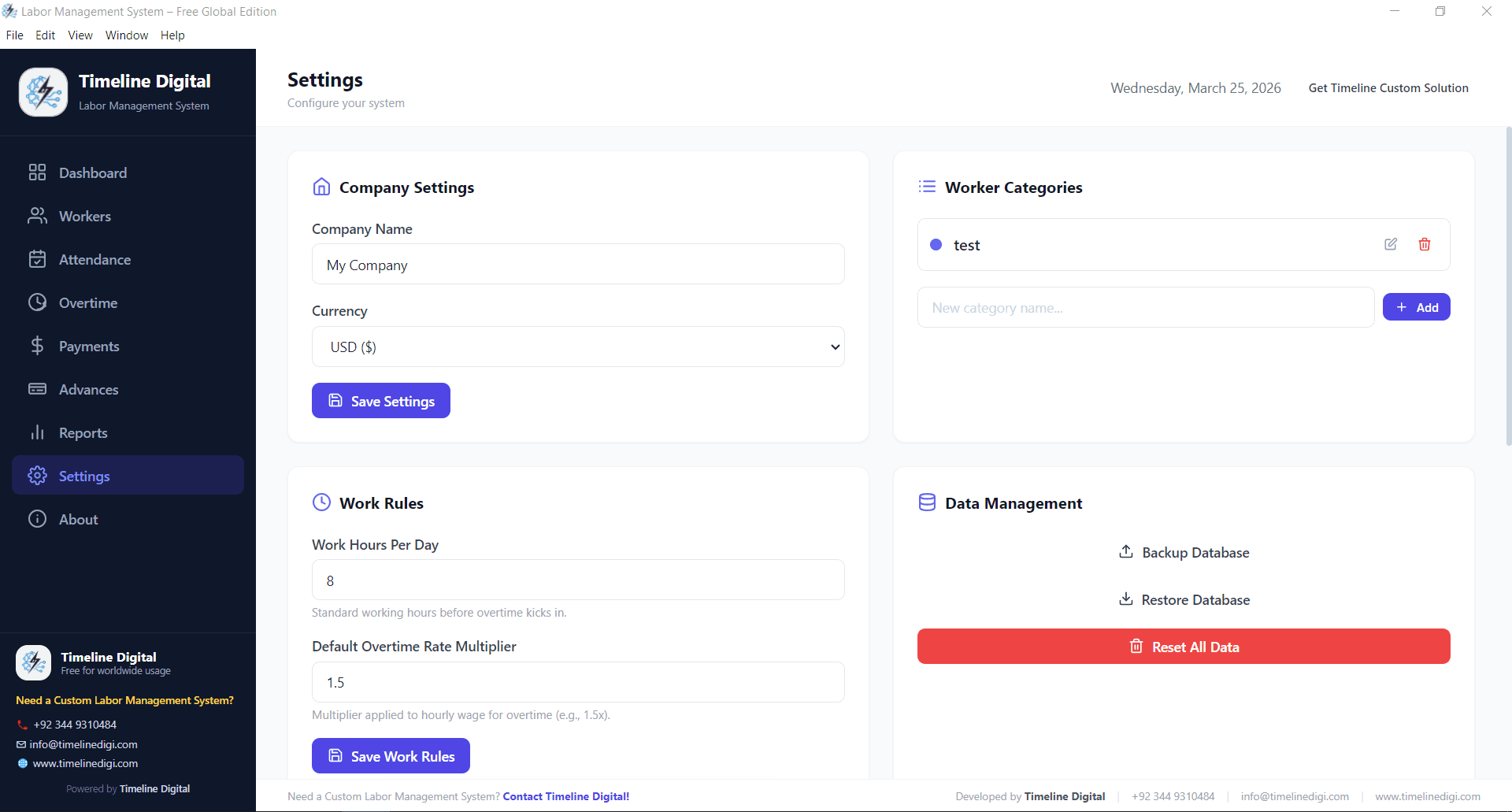
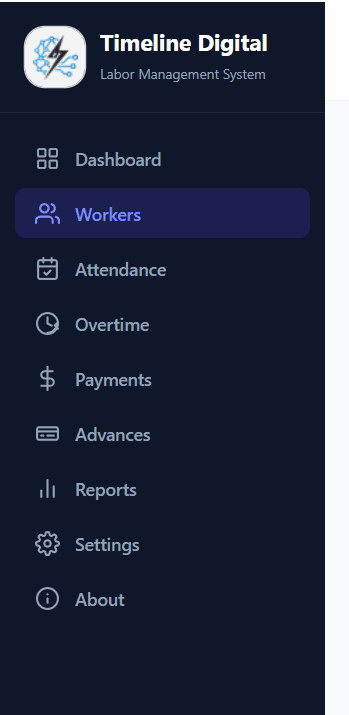
100% free, works offline, no subscription needed. Learn more about Timeline Labor Management
Enterprise Labor Management System FAQs
Direct answers to common questions buyers ask before investing in enterprise labor management system.
What is enterprise labor management system?+
Enterprise Labor Management System is a system for planning workforce demand, managing attendance, tracking labor performance, and keeping labor cost visible across the business. A strong implementation links schedules, hours, approvals, reporting, and compliance so supervisors and executives can act on the same data.
Who needs enterprise labor management system?+
Multi-site enterprise operations benefit most when labor demand changes quickly, approvals are manual, or reporting is fragmented. The software becomes especially valuable when multiple sites, shifts, departments, or vendors must work inside one consistent operating model.
What should a modern enterprise labor management system solution include?+
A modern solution should include scheduling or time capture, policy rules, approval workflows, reporting dashboards, audit history, and integrations with payroll, ERP, WMS, HRIS, or project systems. The exact module mix depends on whether you prioritize compliance, productivity, staffing speed, or executive visibility.
How long does it take to build enterprise labor management system?+
Most MVP projects take 8 to 14 weeks, while larger enterprise platforms are delivered in phases over several months. Timeline Digital starts with workflow discovery, data mapping, and scope definition so the roadmap reflects your labor rules, integrations, and reporting priorities from the beginning.
Can enterprise labor management system integrate with payroll and operations systems?+
Yes. We regularly integrate labor platforms with payroll, ERP, HRIS, analytics, WMS, CRM, and project systems so your teams avoid duplicate entry. Integration is critical because labor data only becomes useful when finance, operations, and management all trust the same source.
Can Timeline Digital build custom enterprise labor management system?+
Yes. We design custom enterprise labor management system platforms around your workflows, labor rules, approvals, reporting needs, and integrations. That lets you keep the processes that work, automate the ones that slow you down, and avoid paying for modules your teams never use.
Need enterprise labor management system built around your workflow?
Start with our free labor management system. Download it now and manage workers, attendance, overtime, and payments immediately. If your business needs a custom enterprise solution with advanced integrations and multi-location support, Timeline Digital can build a tailored platform for you.
Need a custom enterprise version? Contact us for a free consultation. | View full product page