Web Application Development
Web Applications That Actually Work at Scale
Next.js and ASP.NET Core frontend-to-backend, PostgreSQL and Redis for data and caching, Docker and Kubernetes for deployment, all built to a signed-off Figma prototype before the first line of backend code.
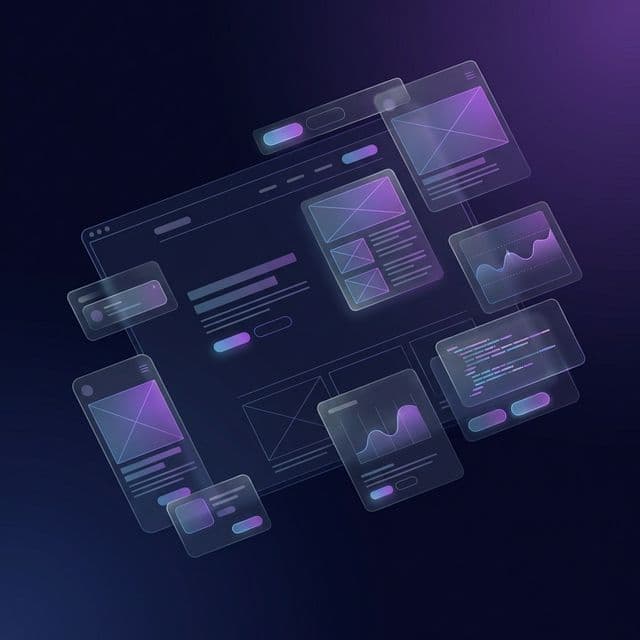
Web Apps Capabilities
- Custom Web Applications
- Customer Portals
- Internal Dashboards
- Progressive Web Apps (PWAs)
- B2B/B2C Web Portals
- SaaS Web Platforms
What is web application development?
A web application is business logic running in a browser, not a brochure site. We build customer portals, operational dashboards, workflow tools, and SaaS platforms that process real transactions and connect to your existing systems. This page explains web application development in plain language: what it includes, how it works, who it is for, and how to get started.
Web application development is building software that runs in the browser: customer portals, dashboards, online products, and internal tools. The app is built around your business and the people who use it. A senior team builds it to stay fast and secure, with proper logins and reliability built in from the start.
web application development is a structured way to plan, build, and improve digital solutions that solve real business problems. It typically includes discovery, design, implementation, testing, and ongoing optimization. The goal is measurable outcomes: faster workflows, better user experience, higher conversions, and reliable performance.
We work with clients across the USA, UK, Germany, Canada and the UAE. See all locations.
Related topics we cover
- Custom Web Applications
- Customer Portals
- Internal Dashboards
- Progressive Web Apps (PWAs)
- B2B/B2C Web Portals
- SaaS Web Platforms
Looking for a quick recommendation? Tell us your goal and we'll suggest the best plan.
web application development: outcomes
Short paragraphs, clear structure, and practical details to help you choose the right solution.
If your team is struggling with slow processes, manual reporting, inconsistent brand messaging, or poor lead quality, the right web application development approach can remove bottlenecks quickly. We focus on the essentials first: strategy, clarity, performance, and conversion, then iterate based on data.
The distinction between a website and a web application matters because it determines the architecture, security model, and infrastructure you need. A website displays content. A web application processes data: it handles user authentication, enforces business rules, writes to a database, and integrates with external services like payment gateways, ERPs, or third-party APIs. At Timeline Digital, web application projects start with a Figma prototype reviewed and signed off before any backend is built. This is not a cosmetic step. It surfaces data model assumptions, user permission structures, and workflow edge cases before they become expensive to change. We build on Next.js and React for the frontend because server-side rendering materially improves time-to-interactive on data-heavy dashboards and is beneficial for search indexability on public-facing portals. Backend services run on ASP.NET Core for high-throughput transactional systems and NestJS for event-driven architectures. PostgreSQL handles relational data; Redis handles session state and caching layers that keep response times under 200ms at load. Docker and Kubernetes manage deployment reproducibility across staging and production environments.
Common problems
- A legacy portal is slow, breaks on mobile and costs more to maintain than to rebuild
- Customer onboarding still runs through email, PDFs and shared spreadsheets
- Each new feature ships months late because the codebase is undocumented and brittle
- You need a real SaaS product, not a WordPress plugin pretending to be one
Our solutions
- A solid, modern build that fits your team and your needs
- Secure logins and the right level of access for each user, built in from the start
- Genuinely fast pages, tuned and proven, not just promised
- A careful launch with close monitoring, so any issue is caught early and fixed fast
External reference: Google Search Central documentation
What's included in web application development
A clear breakdown of the components that make web application development effective.
Custom Web Applications
Web apps built around the exact way your team works. Fast, secure, and easy to use every day. We scope this properly so it supports your goals, avoids rework, and stays measurable.
Explore Custom Web Applications· Need this done fast? Chat on WhatsApp.
Customer Portals
Self-service portals where your customers manage their accounts, track orders, and find what they need. We scope this properly so it supports your goals, avoids rework, and stays measurable.
Explore Customer Portals· Need this done fast? Chat on WhatsApp.
Internal Dashboards
Clear dashboards that let your team see key numbers and handle daily work in one place. We scope this properly so it supports your goals, avoids rework, and stays measurable.
Explore Internal Dashboards· Need this done fast? Chat on WhatsApp.
Progressive Web Apps
Web apps that feel like a phone app. They can even work offline and send notifications. We scope this properly so it supports your goals, avoids rework, and stays measurable.
Explore Progressive Web Apps· Need this done fast? Chat on WhatsApp.
Typical deliverables
- Custom Web Applications
- Customer Portals
- Internal Dashboards
- Progressive Web Apps (PWAs)
- B2B/B2C Web Portals
- SaaS Web Platforms
Benefits of web application development
Practical outcomes you can expect from our web application development approach.
Platform Independence
Web apps run in any browser. They work on Windows, Mac, phones, and tablets, with no separate versions to build.
Always Up-to-Date
Everyone always uses the latest version. There are no downloads or updates for your users to manage.
Highly Scalable
Your app grows with your business. It handles busy times smoothly and scales back when things are quiet.
One App for Every Device
One app serves every device. That means less to build, test, and look after over time.
How web application development works (our process)
Our proven methodology ensures successful delivery of every project, from initial concept to production launch.
Requirements Workshop & Scope Document
We conduct a structured discovery session to map user roles, permission levels, data entities, workflow states, and external integration points. You receive a written Scope Document listing every feature, API dependency, and acceptance criterion, reviewed and signed before design begins. This becomes the reference document for all subsequent decisions.
Figma Prototype & Data Model Design
Our UX team produces high-fidelity, interactive Figma screens covering all primary and edge-case user flows. Simultaneously, we produce an Entity Relationship Diagram for your data model. Both are reviewed with your team before development begins, eliminating the most common source of mid-project scope changes: assumptions about how data and interfaces relate.
API-First Backend Development
Backend development on ASP.NET Core or NestJS begins with OpenAPI/Swagger contract definitions, giving your team and any third-party integrators a typed interface specification from day one. You receive staging API access and Postman collection documentation at the end of each sprint, making parallel frontend and backend work reliable and auditable.
Frontend Development & Accessibility QA
Next.js or React frontend is built against the signed-off Figma prototype and the OpenAPI spec. Each sprint closes with a staging deployment and a UAT checklist. QA covers cross-browser compatibility (Chrome, Firefox, Safari, Edge), mobile responsiveness across viewport breakpoints, WCAG 2.1 AA accessibility compliance, and Lighthouse performance scoring.
Security Hardening, Load Testing & Production Deployment
Before go-live, you receive a security review report covering authentication flows, OWASP Top 10 mitigations, and data exposure points. Load testing results demonstrate performance under your projected peak concurrent users. Deployment uses Docker containers on your chosen cloud (AWS or Azure), with a CI/CD pipeline configured so future releases deploy without manual intervention.
Technologies We Use for Web Apps
We pick the right tools and frameworks for the job: production-tested, well-documented, and easy to maintain after launch.
Web Application Development we've shipped
Real client builds, real numbers.
Healthcare
Enterprise Healthcare Portal
Developed a HIPAA-compliant patient portal serving 500K+ users with telemedicine, records management, and real-time scheduling.
500K+
Active Users
60%
Fewer No-Shows
HIPAA
Compliance
Retail & E-Commerce
Multi-Vendor E-Commerce Marketplace
Created a multi-vendor marketplace processing $2M+ monthly with personalized recommendations and sub-second page loads.
$2M+
Monthly GMV
45%
Conversion Lift
<1s
Load Time
Consulting
Corporate Website Redesign & SEO Overhaul
Redesigned a corporate website with modern UX, achieving 3x organic traffic growth and 90+ PageSpeed scores across all pages.
3.2x
Traffic Growth
94/100
PageSpeed
180%
Lead Growth
web application development timelines and next steps
A practical guide to help you plan scope, milestones, and delivery without guesswork.
Most web application development projects succeed when scope is clear, priorities are agreed early, and the delivery process stays transparent. We keep work predictable with the plan agreed up front, short regular updates so you see working software often, clear acceptance criteria, and measurable outcomes.
Quick checklist
- Define the primary goal and success metric (leads, sales, speed, automation)
- Agree on must-have vs nice-to-have features for the first release
- Confirm integrations, content needs, and who approves deliverables
- Plan analytics + tracking so results are measurable after launch
- Book a kickoff call and we'll share a clear project roadmap
Want a tailored plan? Use our contact form or email info@timelinedigi.com.
web application development FAQ
People also ask about web application development. Here are direct answers.
A website primarily serves content to anonymous visitors: pages, blog posts, product descriptions. A web application processes authenticated user actions. It reads and writes to a database, enforces business rules, manages user sessions, and integrates with external services. Examples include a customer portal where clients track their orders and raise support tickets, a dashboard where your operations team monitors KPIs in real time, or an internal workflow tool that routes approval requests between departments. The architecture, security model, and infrastructure required for a web application are substantially different from a marketing site.
Frontend: Next.js and React. Next.js is chosen for applications where server-side rendering matters, since it measurably reduces time-to-interactive on data-heavy dashboards and improves crawlability for public-facing portals. Backend: ASP.NET Core for high-throughput transactional systems requiring strict type safety and .NET ecosystem integrations; NestJS/Node.js for event-driven architectures and real-time features. Databases: PostgreSQL for relational, transactional data; SQL Server where clients have existing Microsoft infrastructure; MongoDB for document-oriented data structures. Redis handles caching and session state, keeping API response times under 200ms. Deployment uses Docker containers orchestrated by Kubernetes, ensuring that what runs in staging is identical to what runs in production.
Yes, and the definition of responsive matters. Every application we build is developed mobile-first, meaning the layout, touch target sizes, and interaction patterns are designed for small screens before they are adapted for desktop. QA includes testing across real device viewports, not just browser emulation, for iOS Safari, Android Chrome, and tablet breakpoints. For applications where mobile usage is primary, we also evaluate whether a Progressive Web App build makes more sense than a standard responsive web approach, since PWAs can support offline functionality and home-screen installation without a native app build.
Yes, and legacy migration is a defined service with its own methodology. The first step is a Legacy Audit: we document the existing application's data model, business rules, and integration points before writing any replacement code. This audit often surfaces undocumented logic baked into the old system that would otherwise be lost. Migration typically runs in parallel. The old system stays operational while the new web application is built and validated. Data migration scripts are tested against production-scale data volumes before cutover. Clients in this process receive a Migration Runbook covering rollback procedures, validation checks, and go-live sequencing.
Security is addressed at the architecture level, not as a post-launch checklist. Authentication uses industry-standard flows: OAuth 2.0 and OpenID Connect for third-party identity providers, JWT with short expiry windows and refresh token rotation for session management. All database queries use parameterized statements to prevent SQL injection. API endpoints enforce rate limiting and input validation at the schema level. File uploads are scanned and stored outside the web root. Before go-live, every application goes through an OWASP Top 10 review, and findings are documented and resolved before production access is granted. HTTPS is enforced with HSTS headers; security headers including CSP, X-Frame-Options, and X-Content-Type-Options are configured on every deployment.
Frontend: Next.js and React for server-rendered and single-page applications, chosen because they produce fast, SEO-friendly interfaces and share components with mobile web views. Backend: ASP.NET Core for enterprise-grade APIs requiring strong typing and Windows compatibility; NestJS/Node.js for event-driven and real-time workloads. Database: PostgreSQL or SQL Server for relational data with complex joins; MongoDB for document-heavy or flexible schema requirements. Redis for session caching and job queues. Docker and Kubernetes for containerized deployment on AWS or Azure.
Compliance requirements are addressed at the architecture stage, not retrofitted afterward. For GDPR: data is stored in EU-region cloud instances, consent management is built into the user flow, and a data subject request API is included. For HIPAA: PHI fields are encrypted at rest and in transit using AES-256, access is logged per field, and BAA agreements are established with cloud providers. Role-based access control (RBAC) and audit logging are standard in every build involving regulated data.
Yes. We can take over a web application another team built, including codebases in React, Next.js, Vue, Laravel, or .NET. The process begins with a structured code audit covering security vulnerabilities, test coverage gaps, database schema quality, and dependency staleness. You receive a written assessment report before any remediation begins. From there, we establish a stable baseline by fixing critical issues first, then move to feature development on a planned sprint cadence.
Other Services You May Need
Custom Software Development
Off-the-shelf software forces your team to adapt to it. We reverse that by building business softwar...
Learn moreWebsite Design & Development
We design modern websites that look great and win customers. Every site is fast, works on phones, an...
Learn moreCloud Services
We move your systems to the cloud and keep them running well. You get less downtime, easy growth, an...
Learn moreWant to talk about your web application development project?
Leave your name and number. No long form. We'll reply on WhatsApp within the hour to understand what you need.
No spam. We only use your number to reply about your project.
Tell Us What You Need. We’ll Scope It in One Call
After you contact us, a senior engineer reviews your message and replies within 4 business hours. The free 30-minute scoping call covers your business objective, the users involved, any systems that need to connect, and which pricing model fits your situation. You receive a written project brief and ballpark estimate within 3 business days, with no obligation to proceed.